Korra: A Corner Companion
Summer 2024
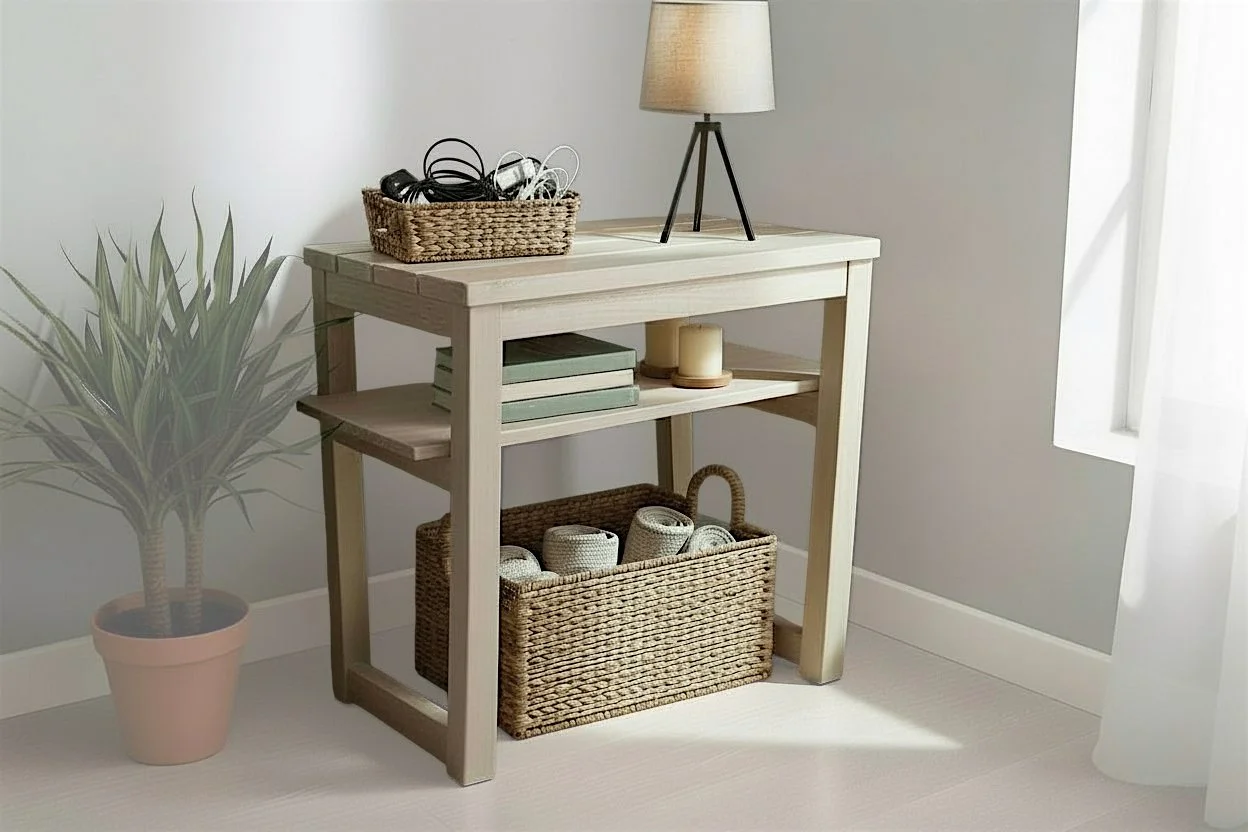
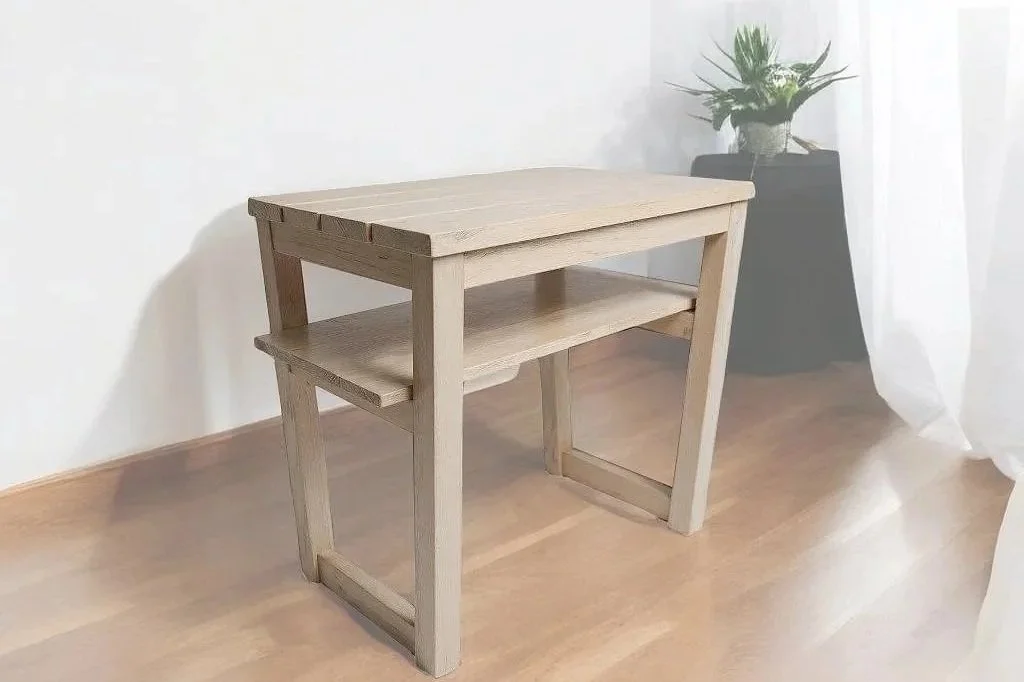
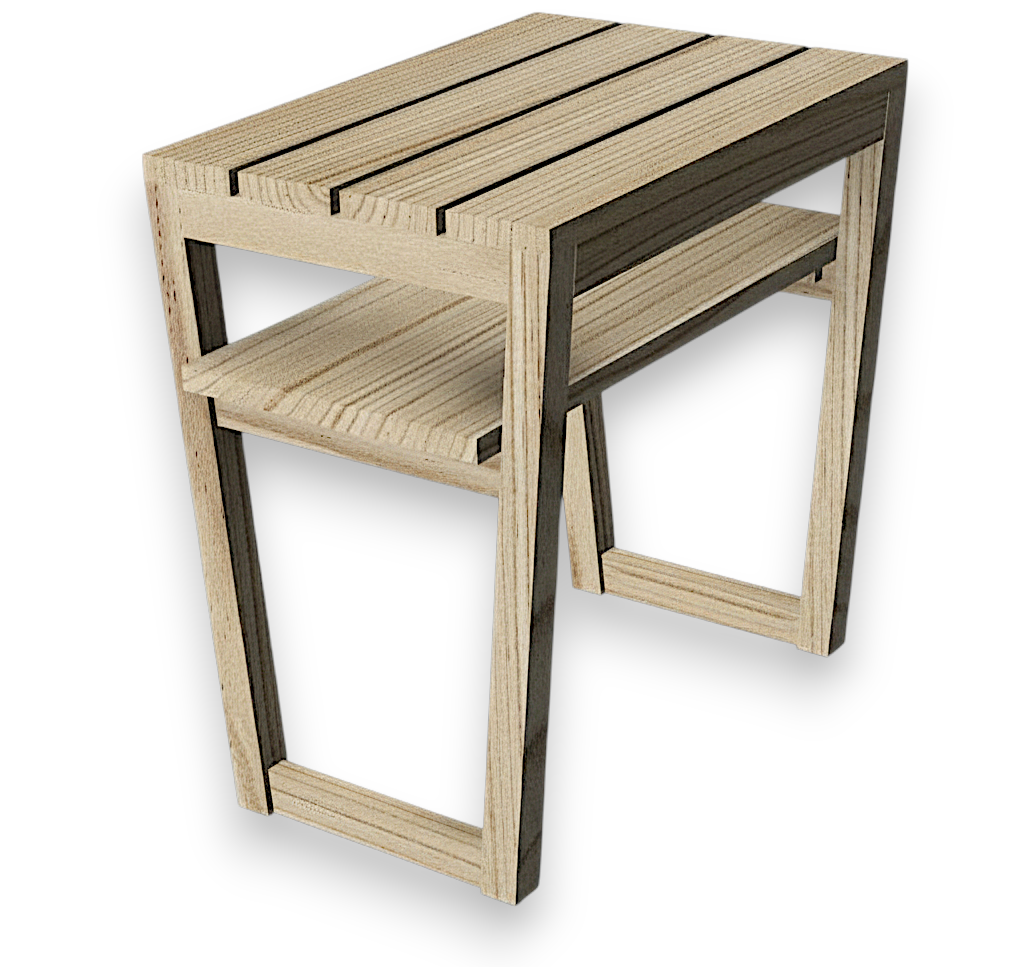
“Korra” is a minimalist maple wood corner table designed for compact living spaces, blending form and function. Born from an exploration of joinery techniques—specifically tenon and domino joints—the final design utilizes domino-jointed legs upon an angled leg frame for lasting structural integrity.
This handcrafted piece uses a thoughtful arrangement of connecting sticks and planes to create a light yet sturdy frame that nestles perfectly into corners. Serving both as a decorative accent and practical storage, Korra offers subtle utility without overpowering a room, making it an ideal addition to modern, space-conscious homes.
Design and build a corner table that leverages domino and tenon joints to ensure long-term durability while maintaining a minimal visual footprint.
Deliver a handcrafted maple wood corner table with domino-jointed legs and an angled frame that provides practical surface area and storage utility without overpowering small spaces.
Design furniture for compact living that demonstrates strong construction knowledge through the intentional use of tenon and domino joinery.
Urban and apartment-based users seeking high-quality, well-constructed furniture designed for modern living.
Early Ideation and Concept Exploration
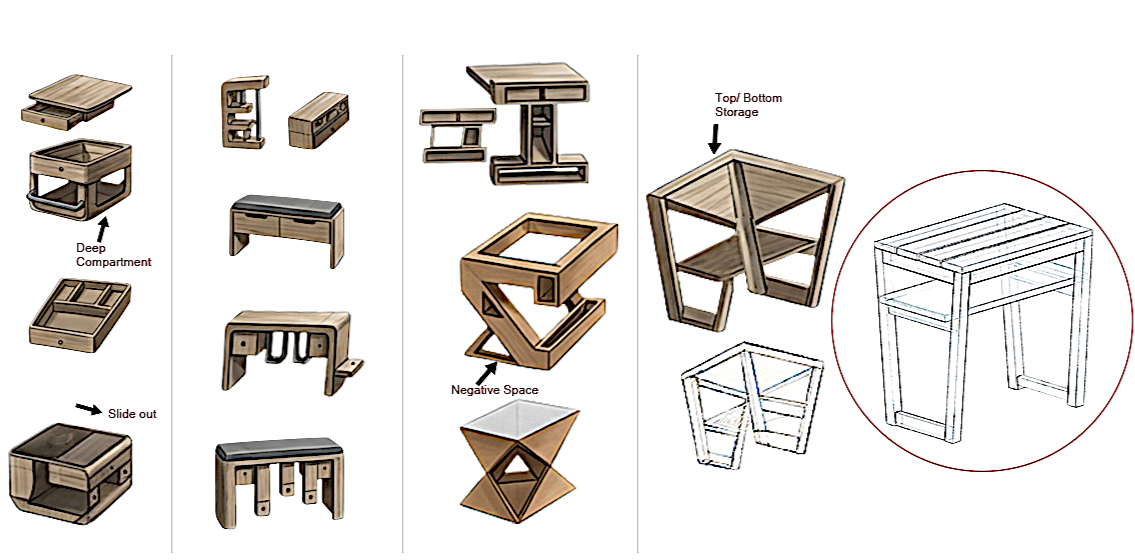
Transformable side tables
Storage Bench and Ottoman
Transformable side tables
Modern Accent Table
Prototyping the Structure
Scale Model and Form Validation
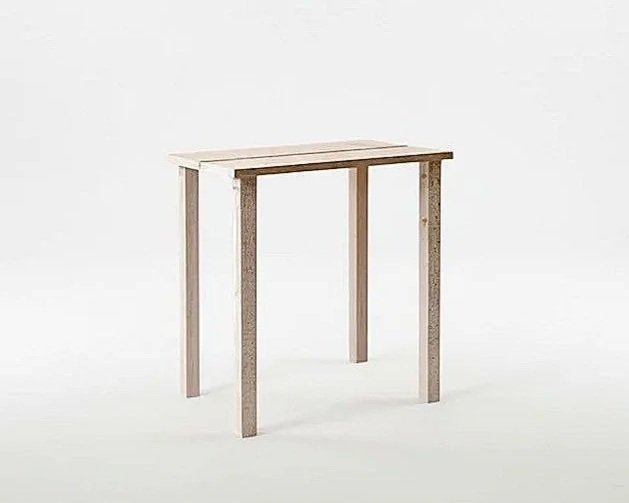
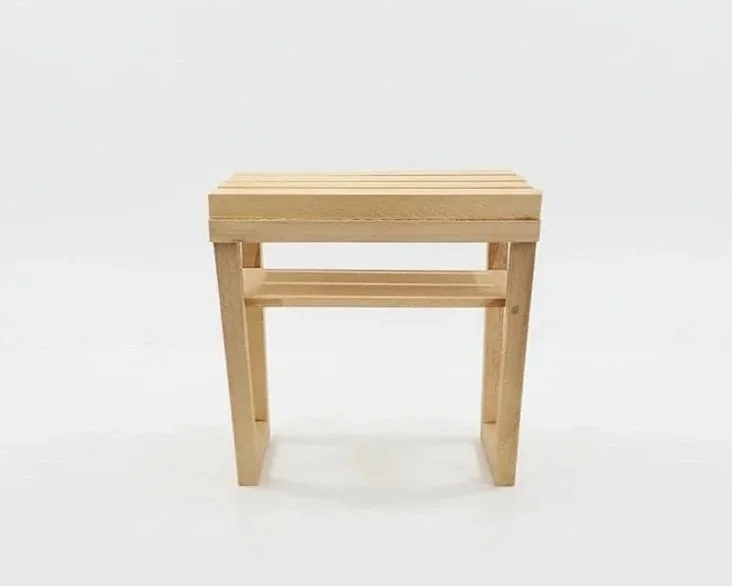
A mini model tested leg proportions and frame angles, refining visual weight and overall balance.
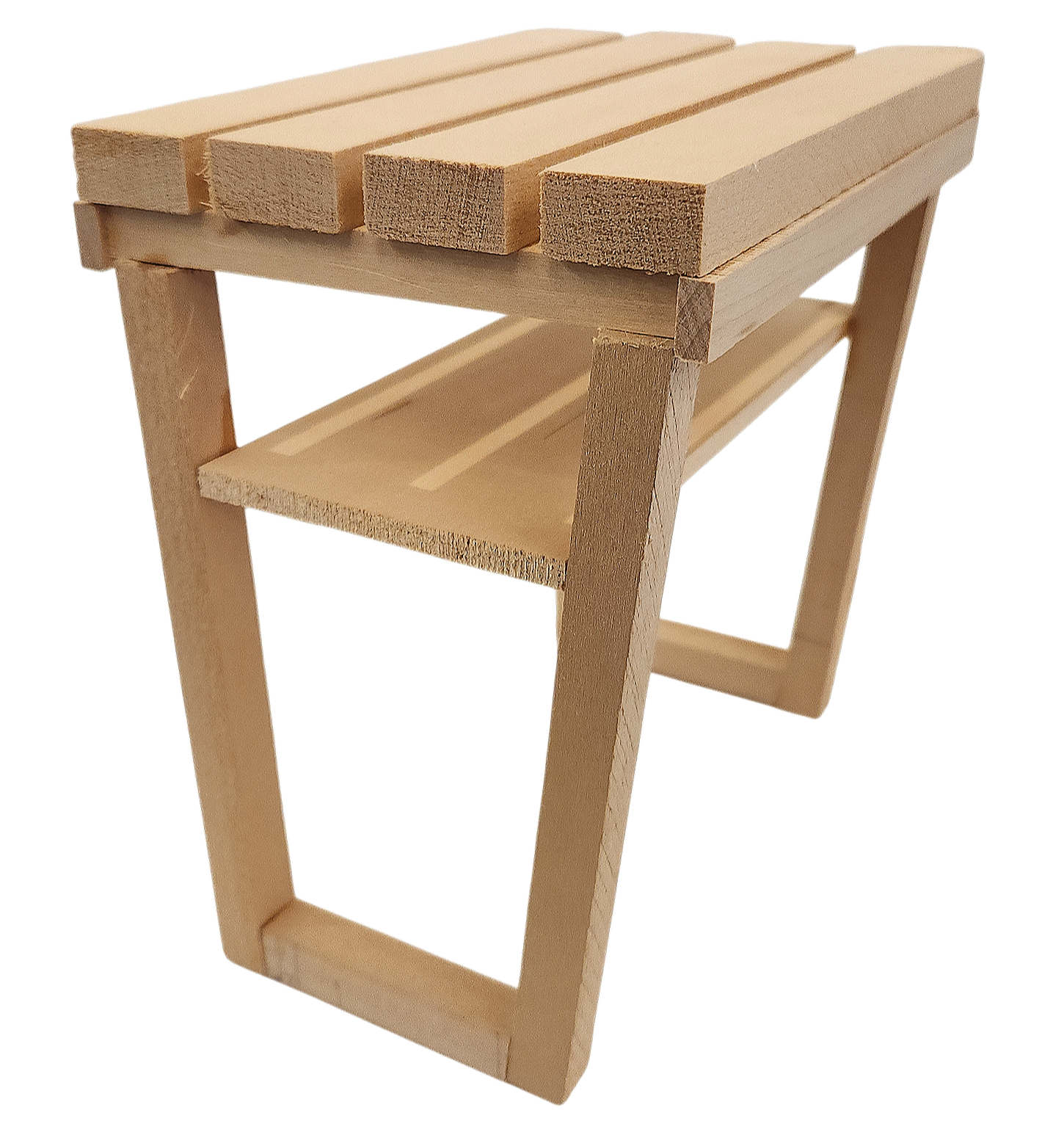
CAD Development & Digital Refinement
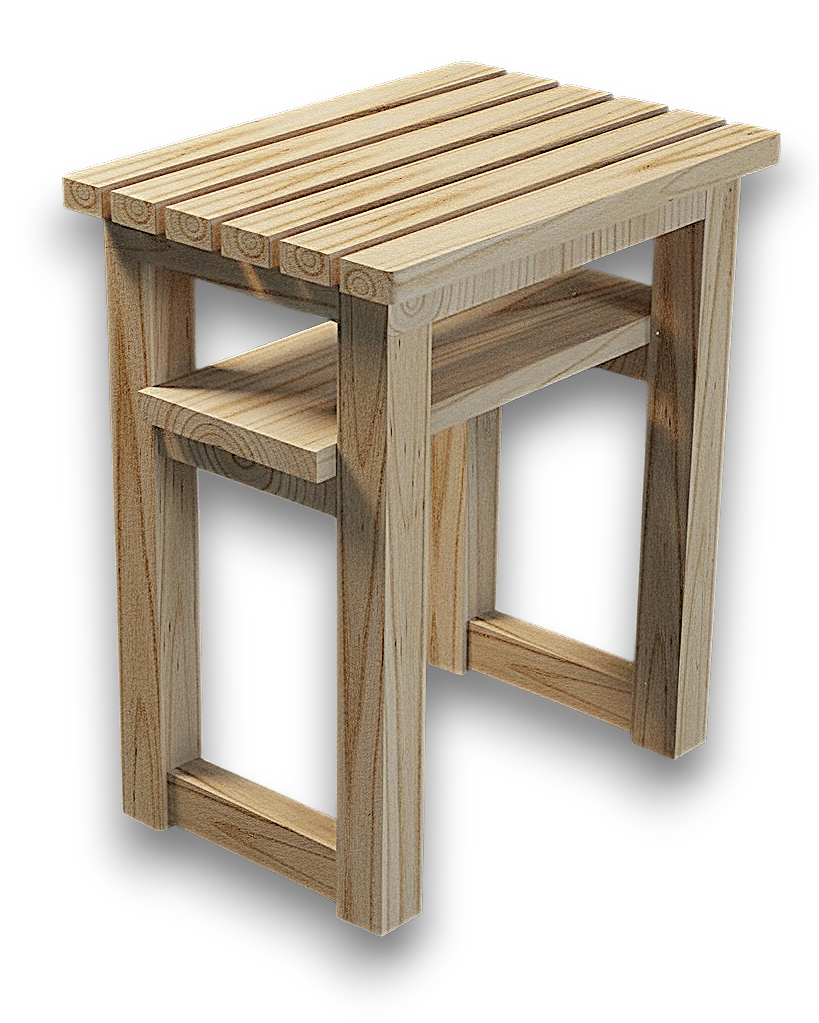
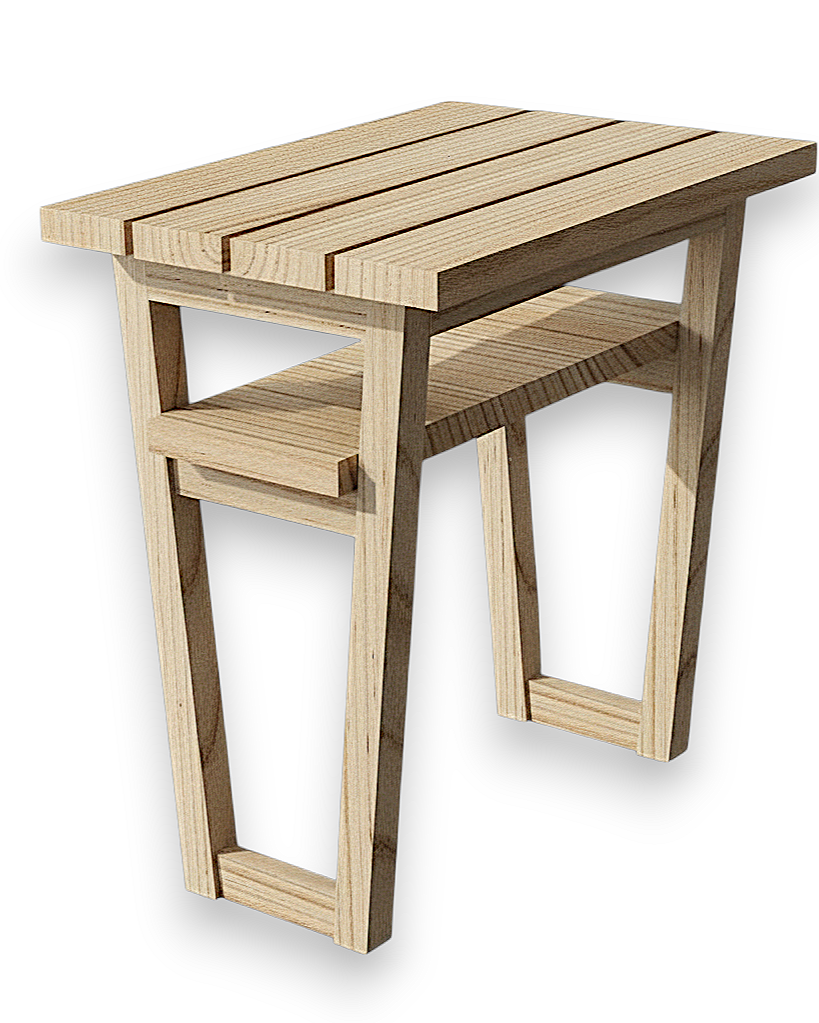
This CAD progression documents the refinement of form, joinery, and structure leading to the final build-ready design.
- Established overall proportions using straight leg geometry
- Served as a baseline for evaluating future leg angle adjustments
- Introduced tapered leg angles to improve visual balance
- Adjusted leg geometry to enhance stability
- Simplified tabletop planks to clarify overall form
- Flushed tabletop planks with outer frame for a cleaner edge
- Increased spacing between angled legs for stability
- Expanded lower leg spacing to improve structural support
Full Scale Build Process
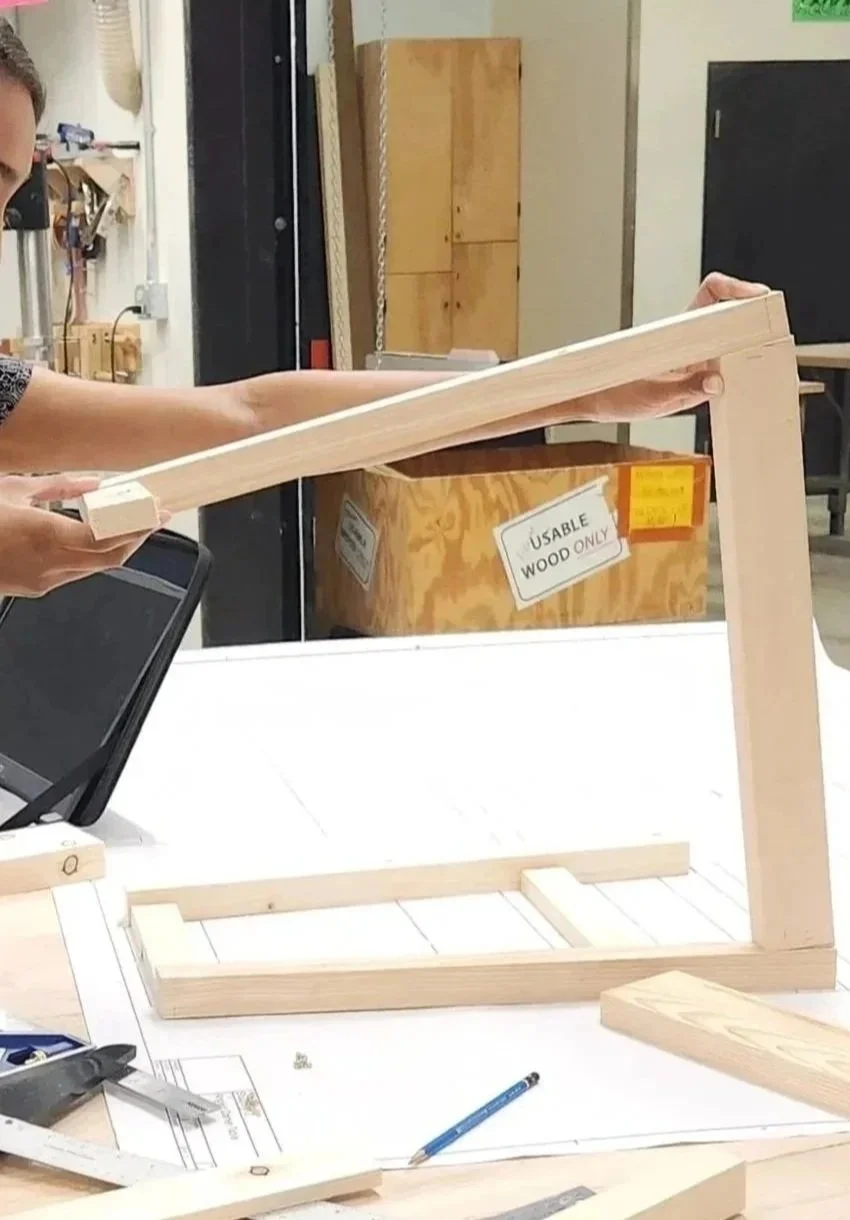
Tested tendon joints on one side and domino joints on the other to compare strength, aesthetics, efficiency, and feasibility.
Outcome: Solid, layered pieces that tested strength and form
Outcome: Fast assembly, clean alignment, strong structure
Reason: Efficient build, structural strength, aesthetically clean finish
Final Model Build Process
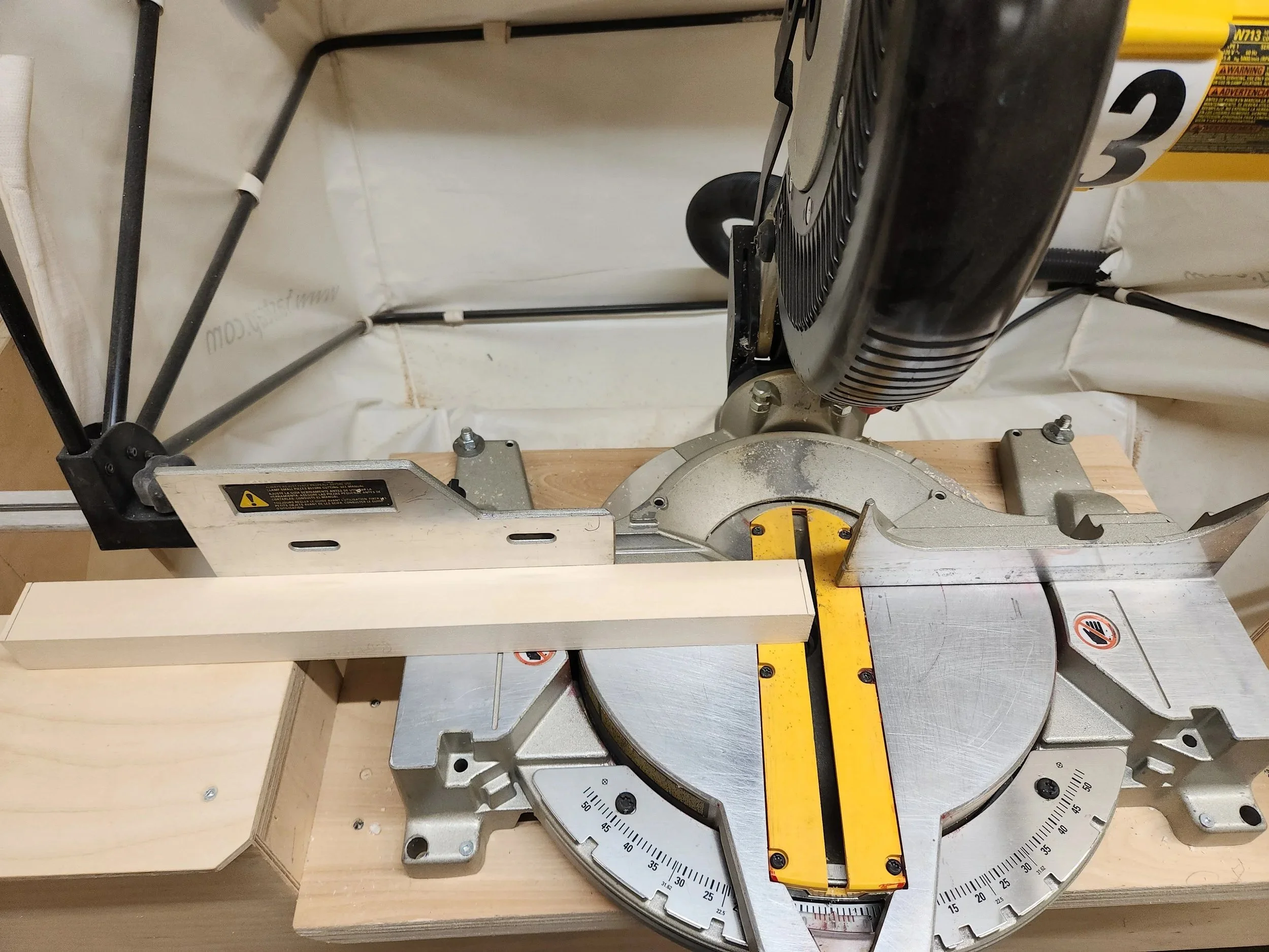
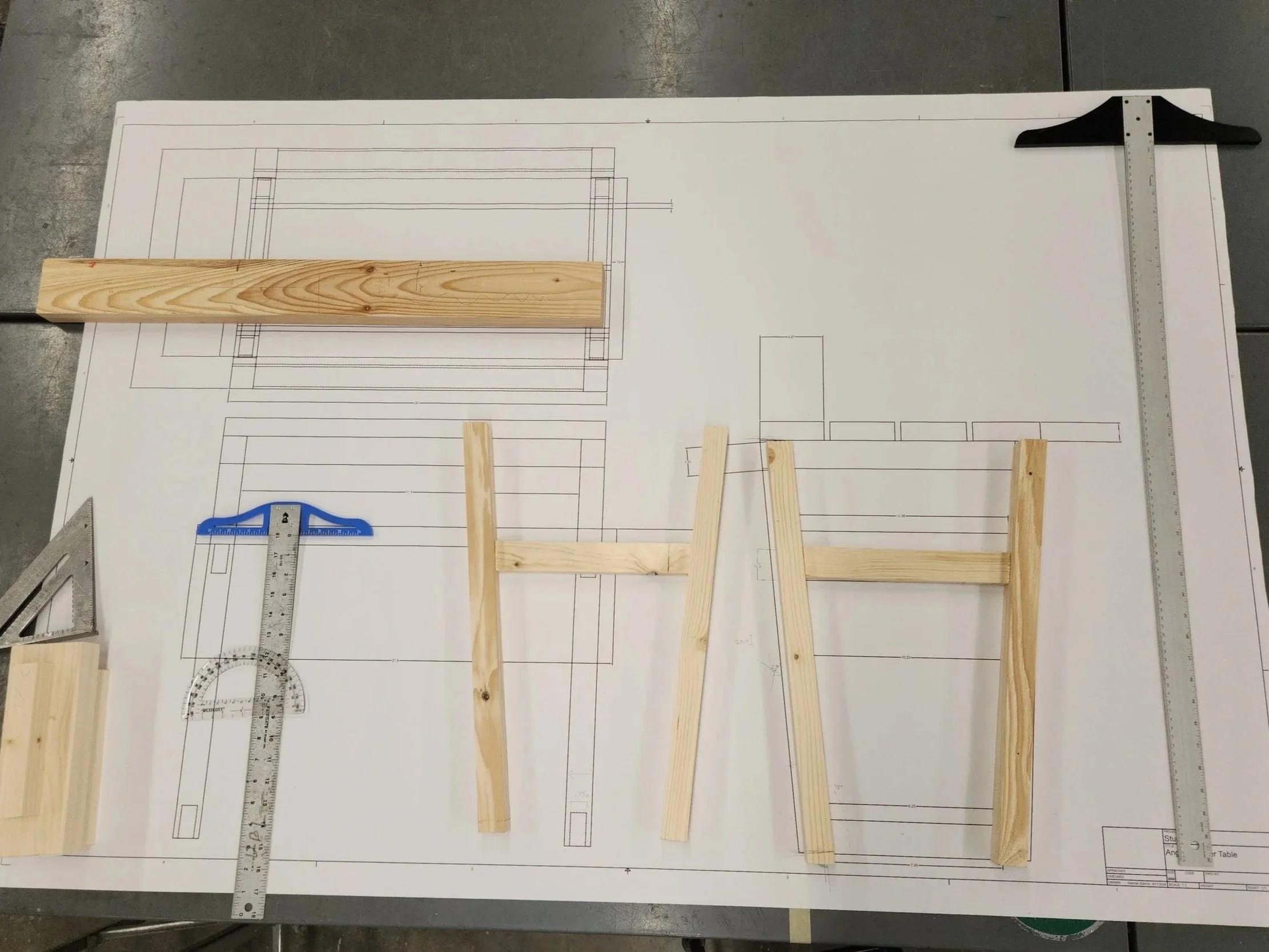
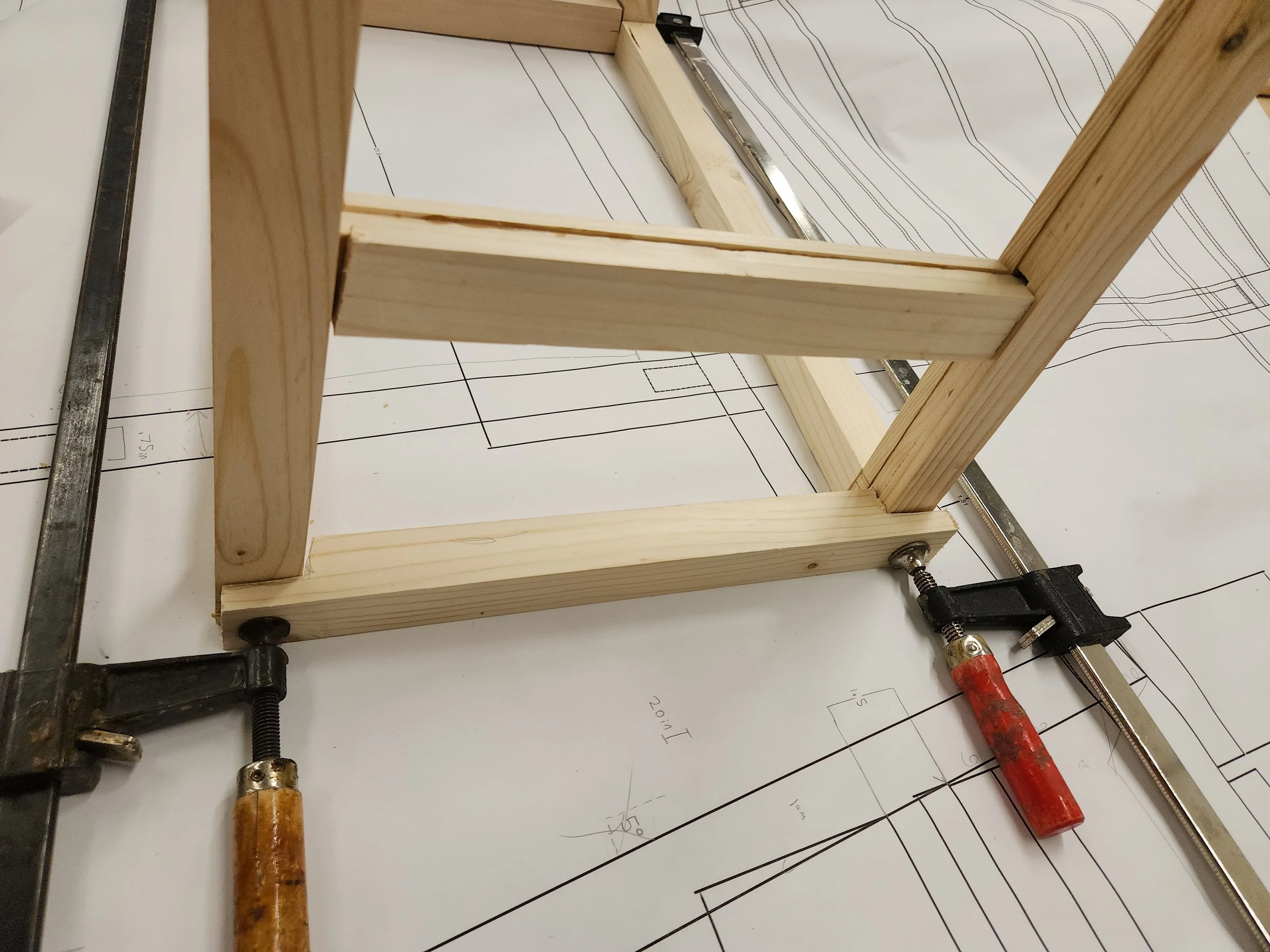
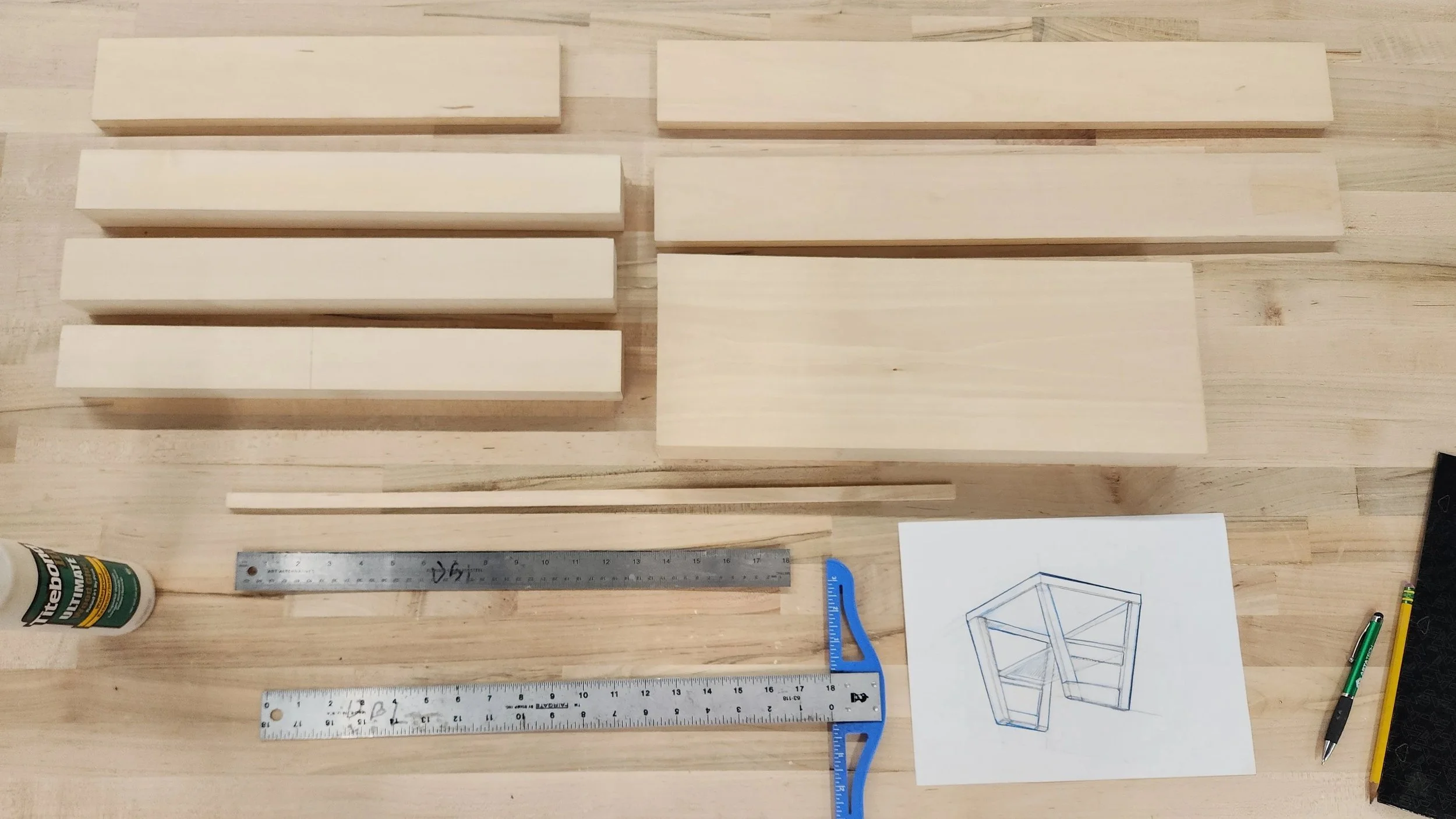
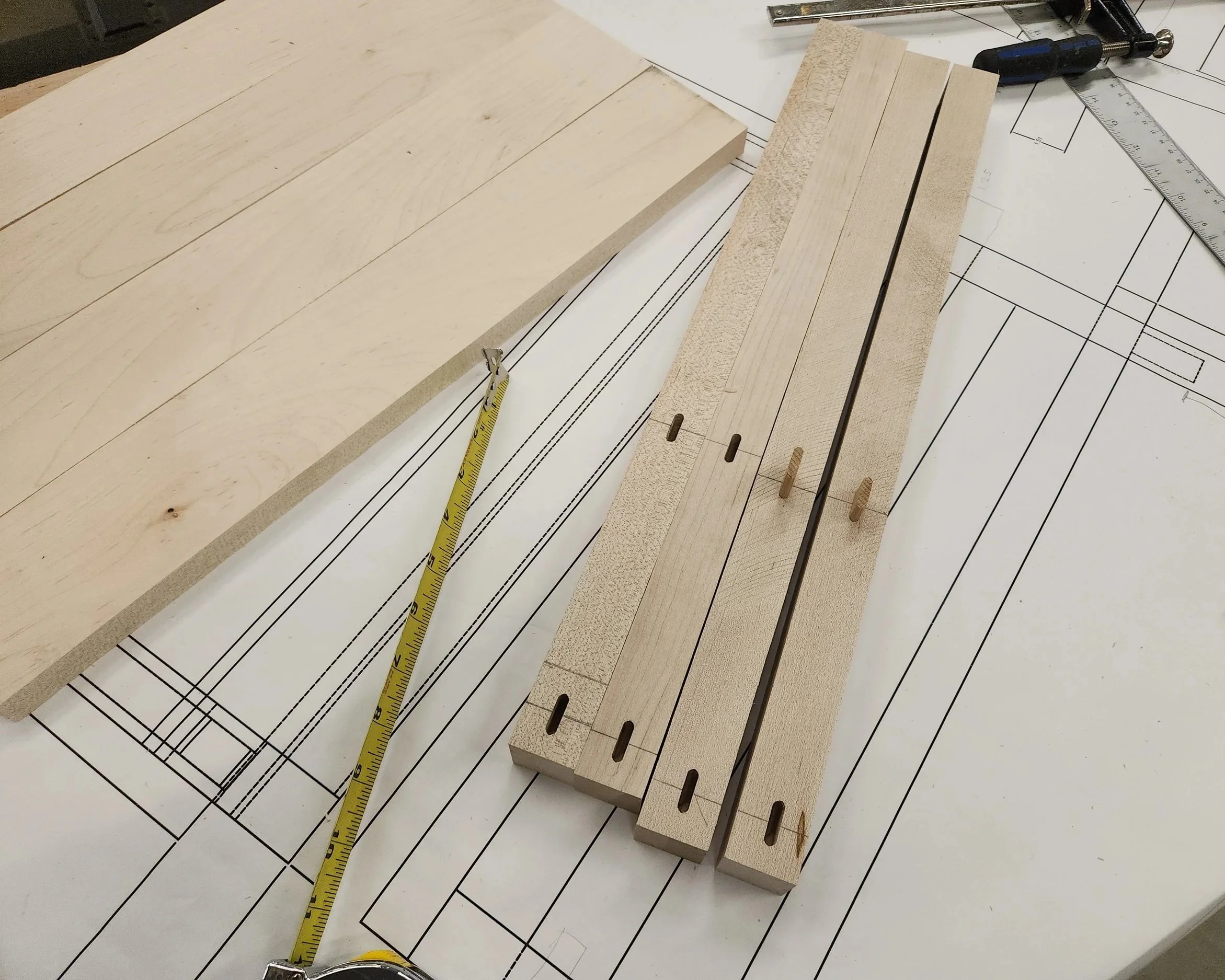
Wood Preparation – Cut all pieces & 45 degrees on legs. Drilled domino holes for joinery.
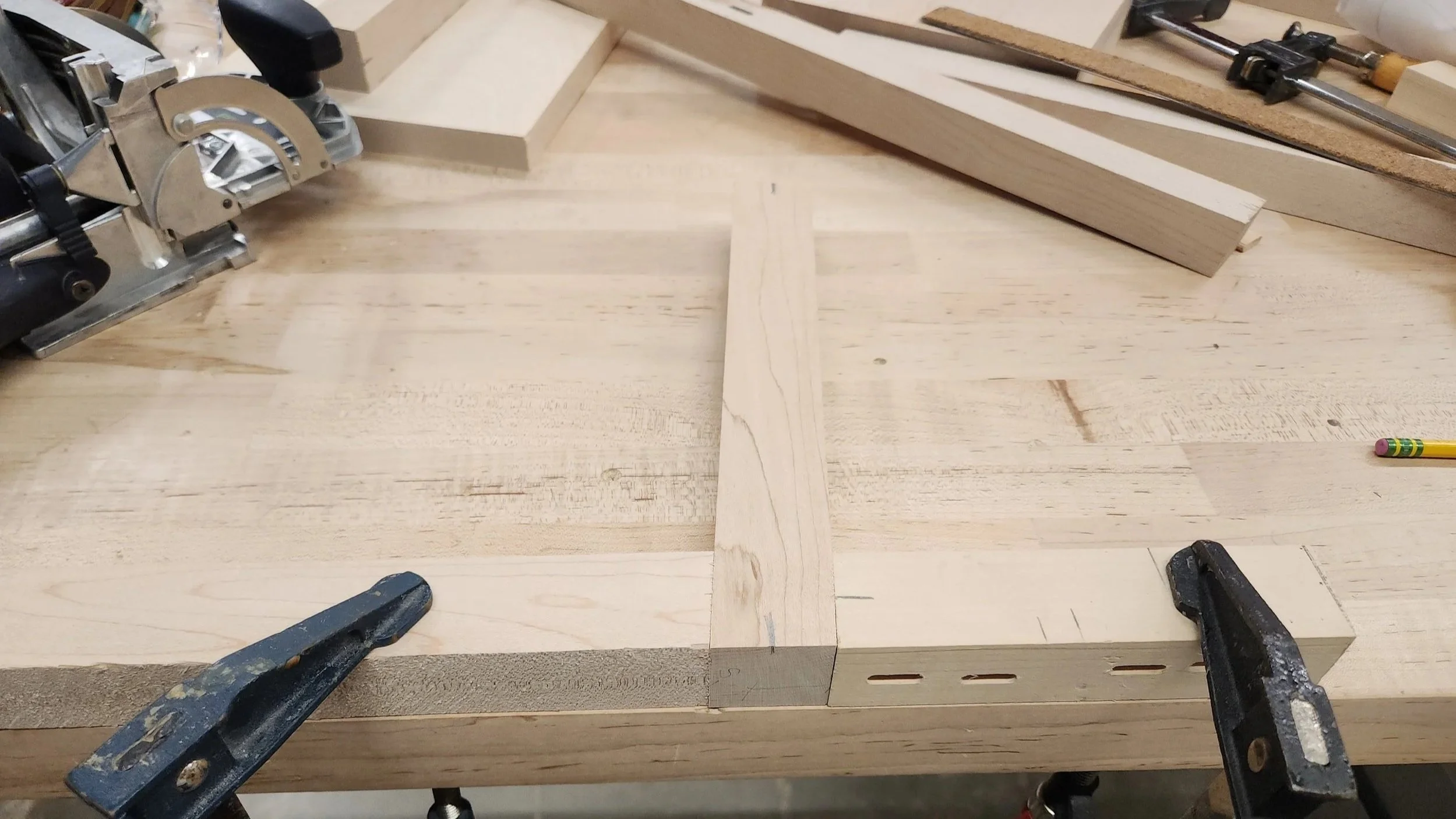
Frame Assembly – Built the lower frame using domino joints.
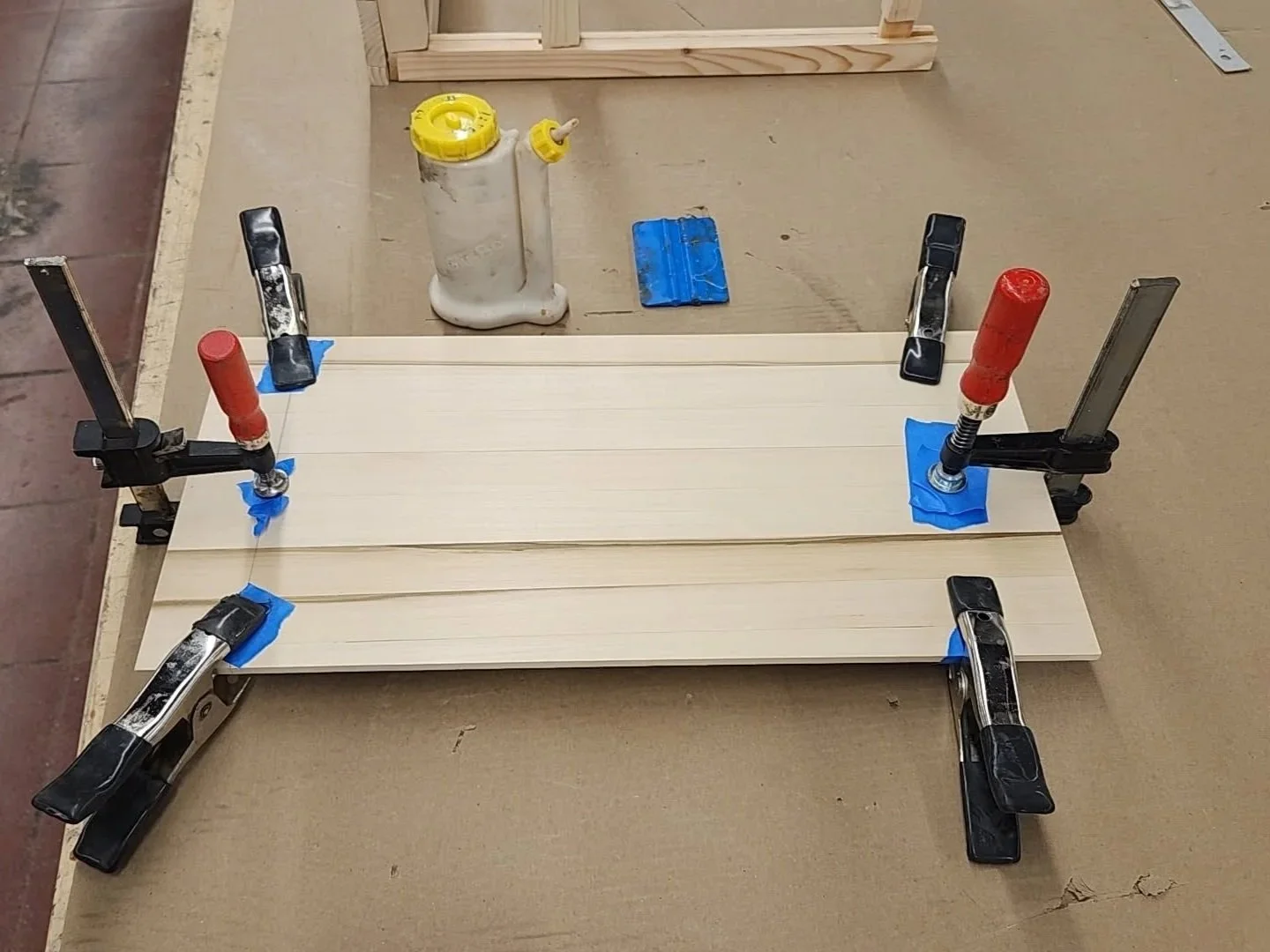
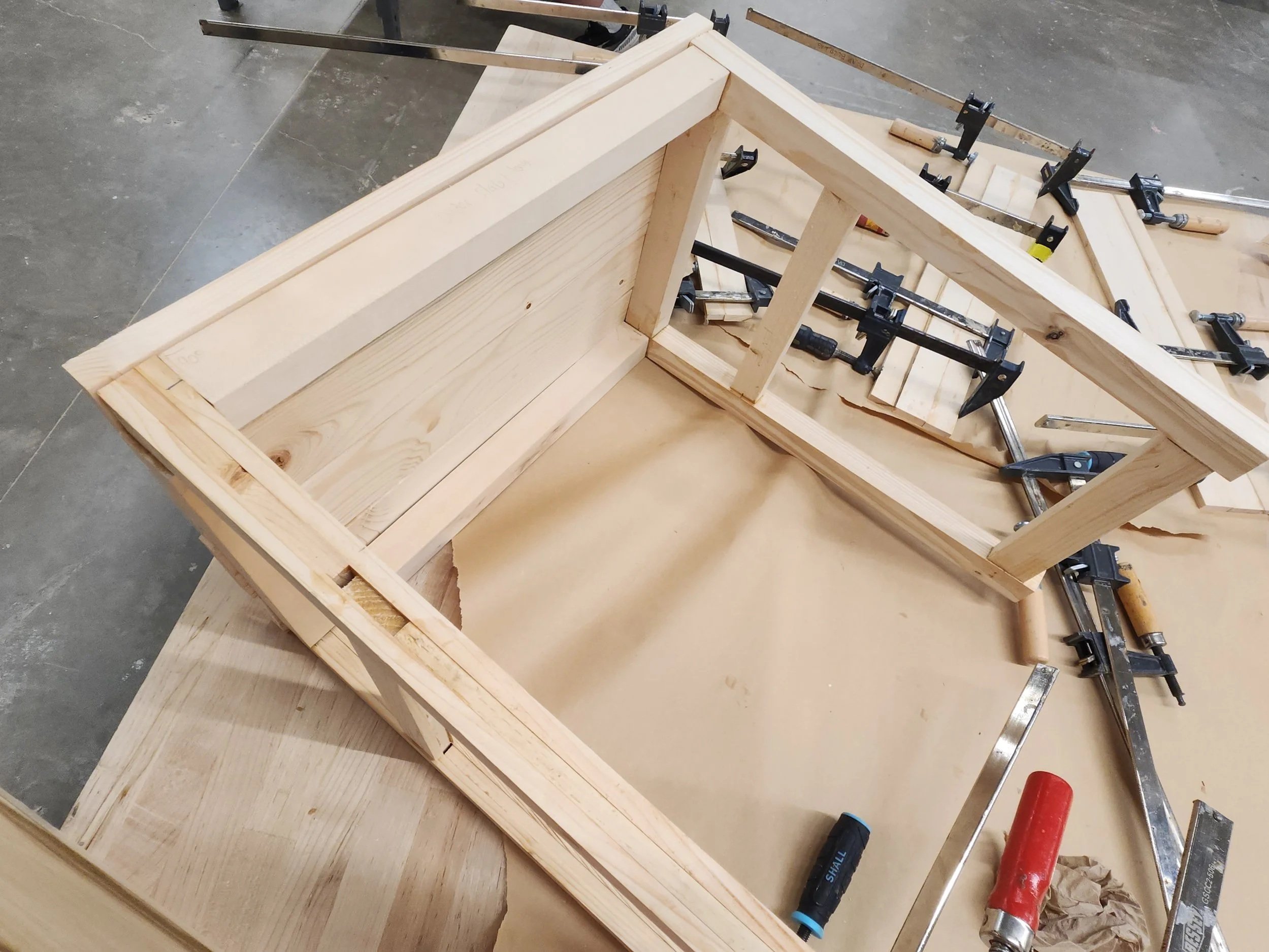
Top Shelf Setup – Cut and glued strips for the top shelf; attached planks with wood screws.
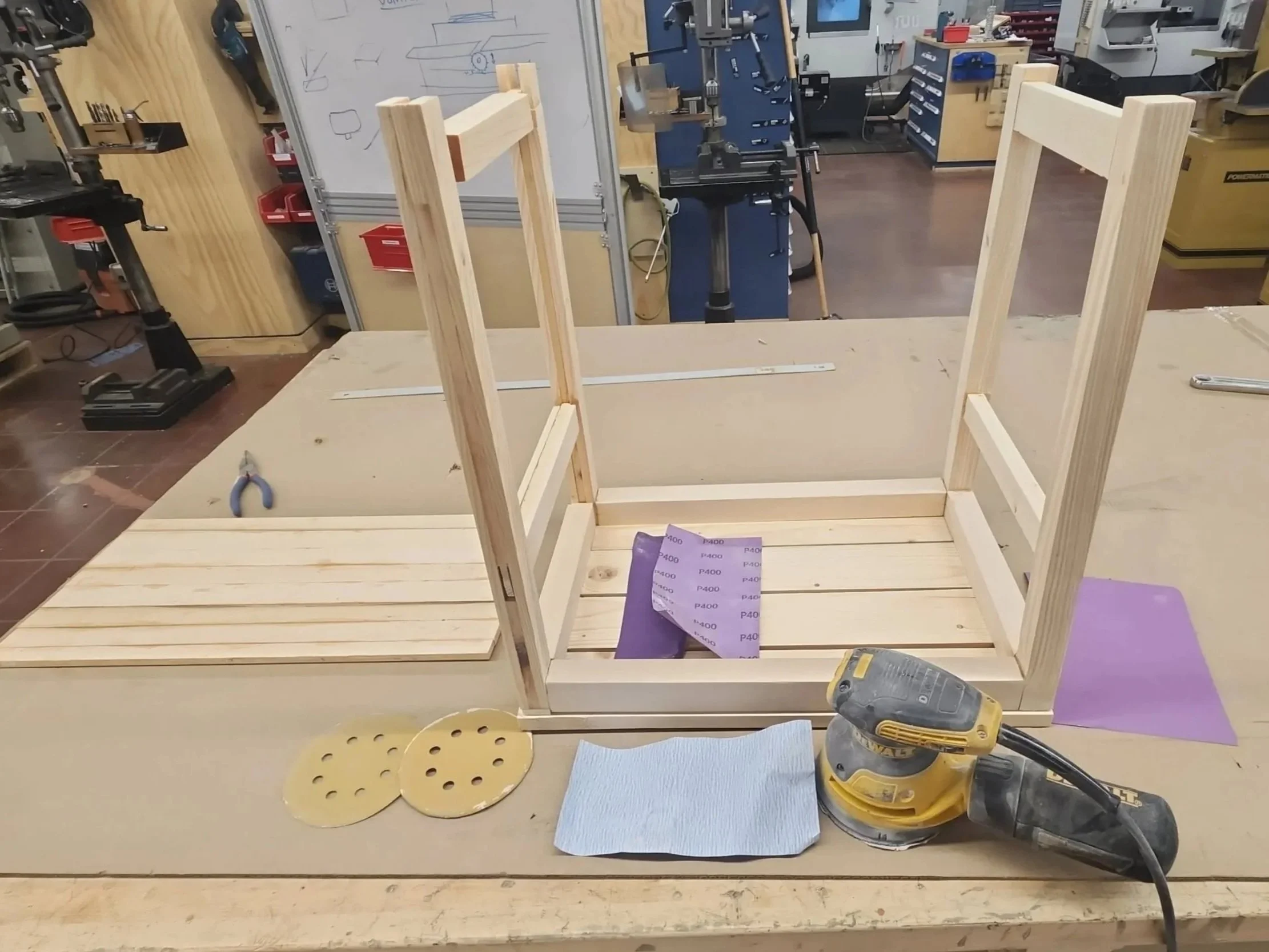
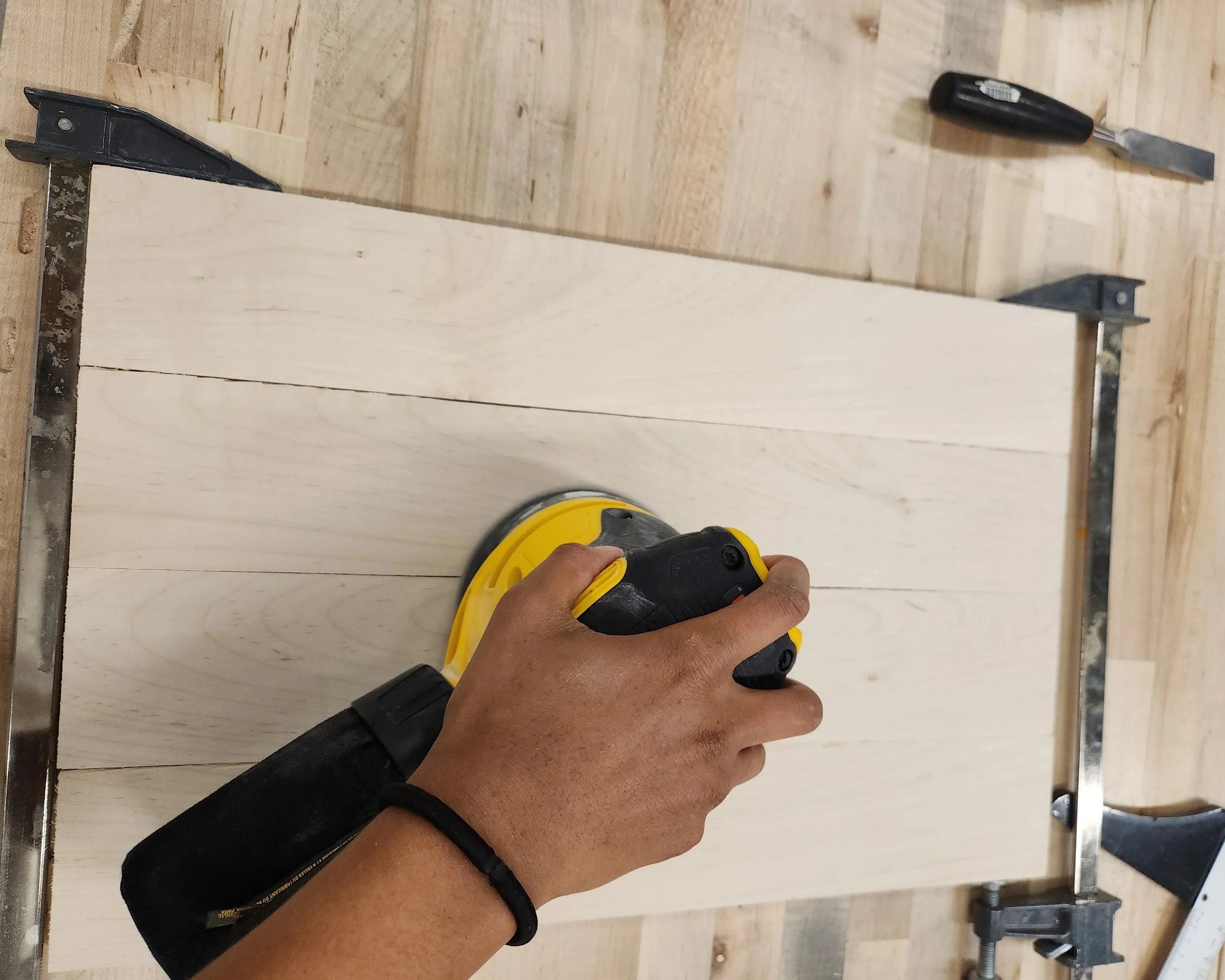
Surface Finishing – Sanded all pieces by hand and palm sander; rounded edges.
Shelf Fabrication – Glued laminated strips, planned to desired thickness, sanded smooth.
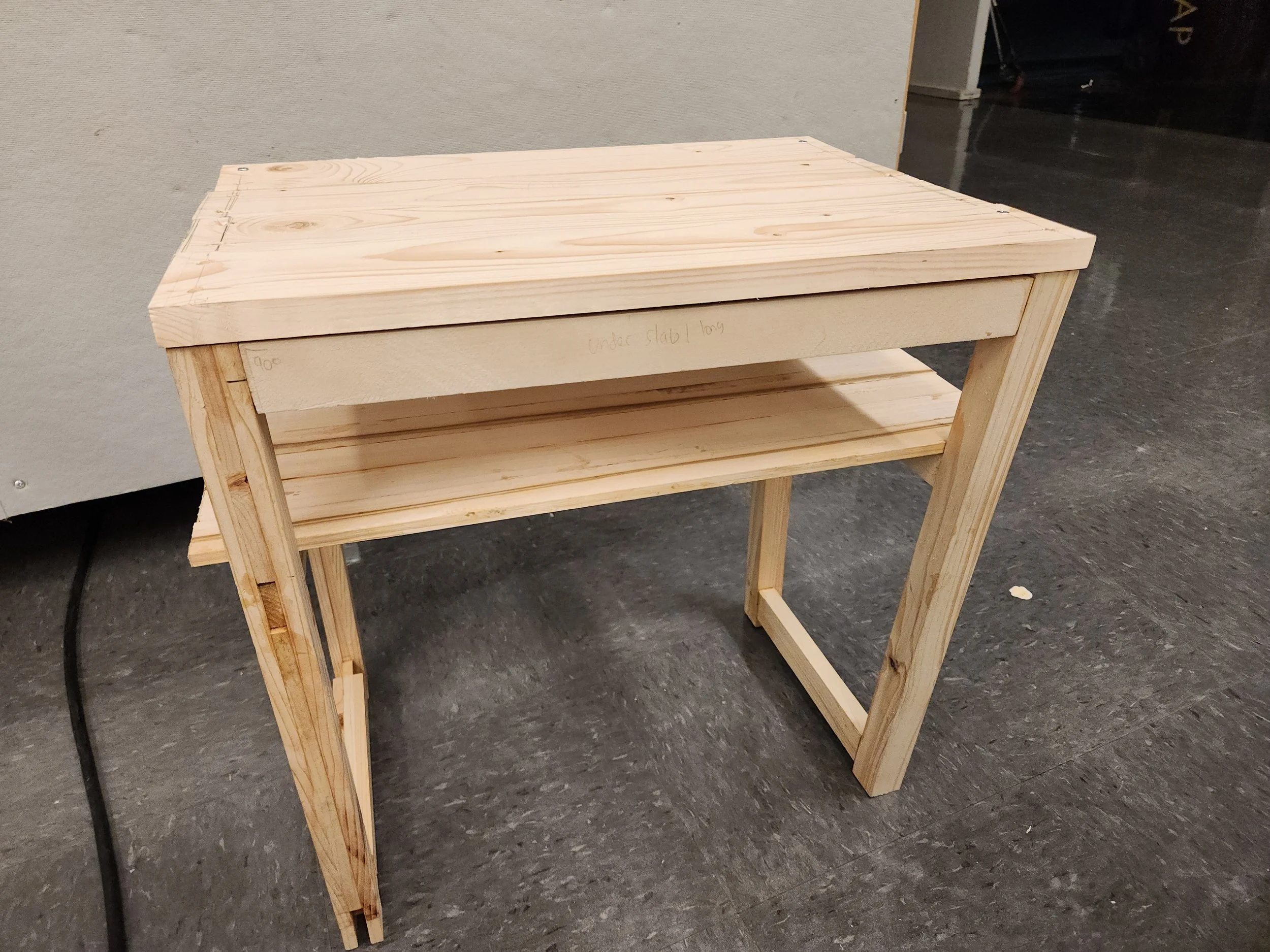
Final Assembly & Detailing – Secured top planks, filled screw holes with wood putty, ready for finishing.
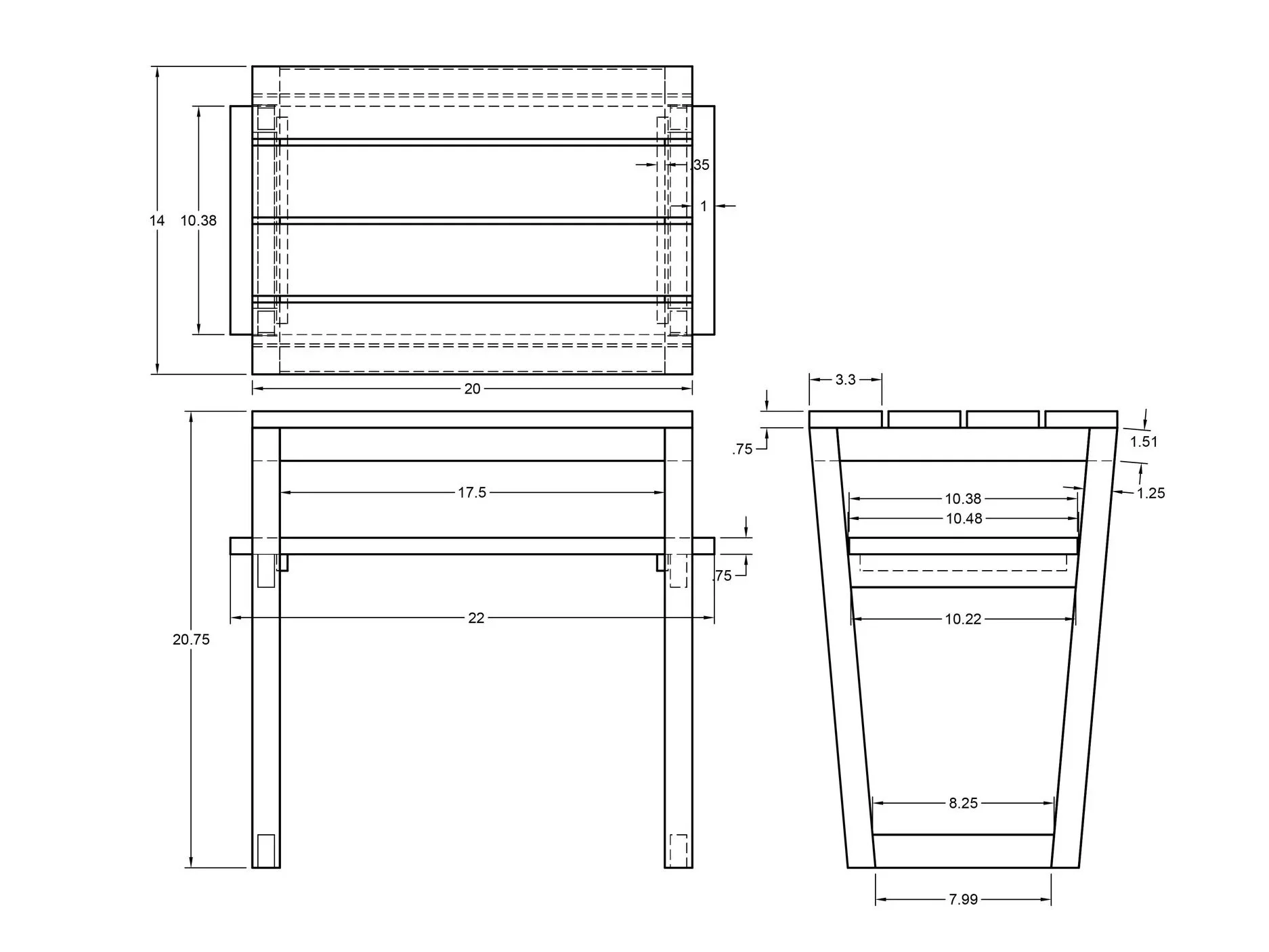
Technical Drawing
Final Model
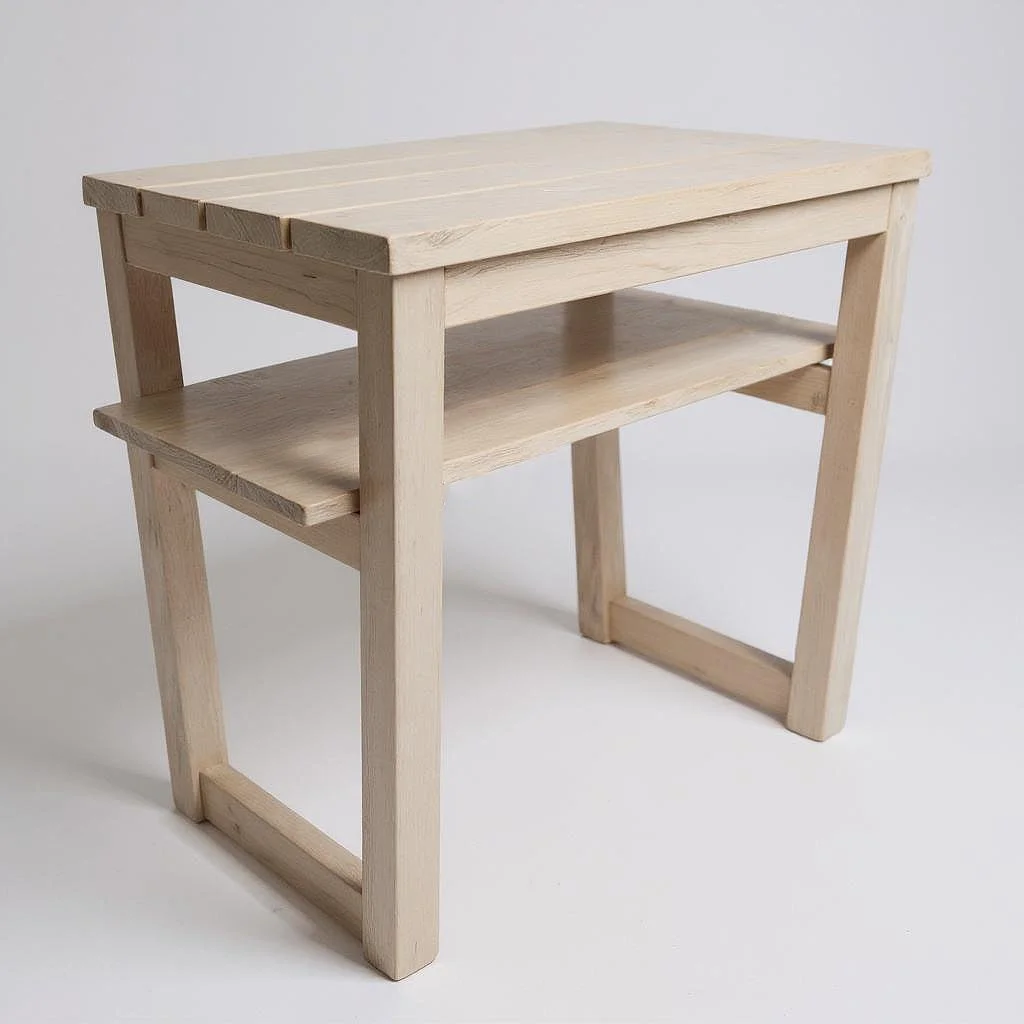
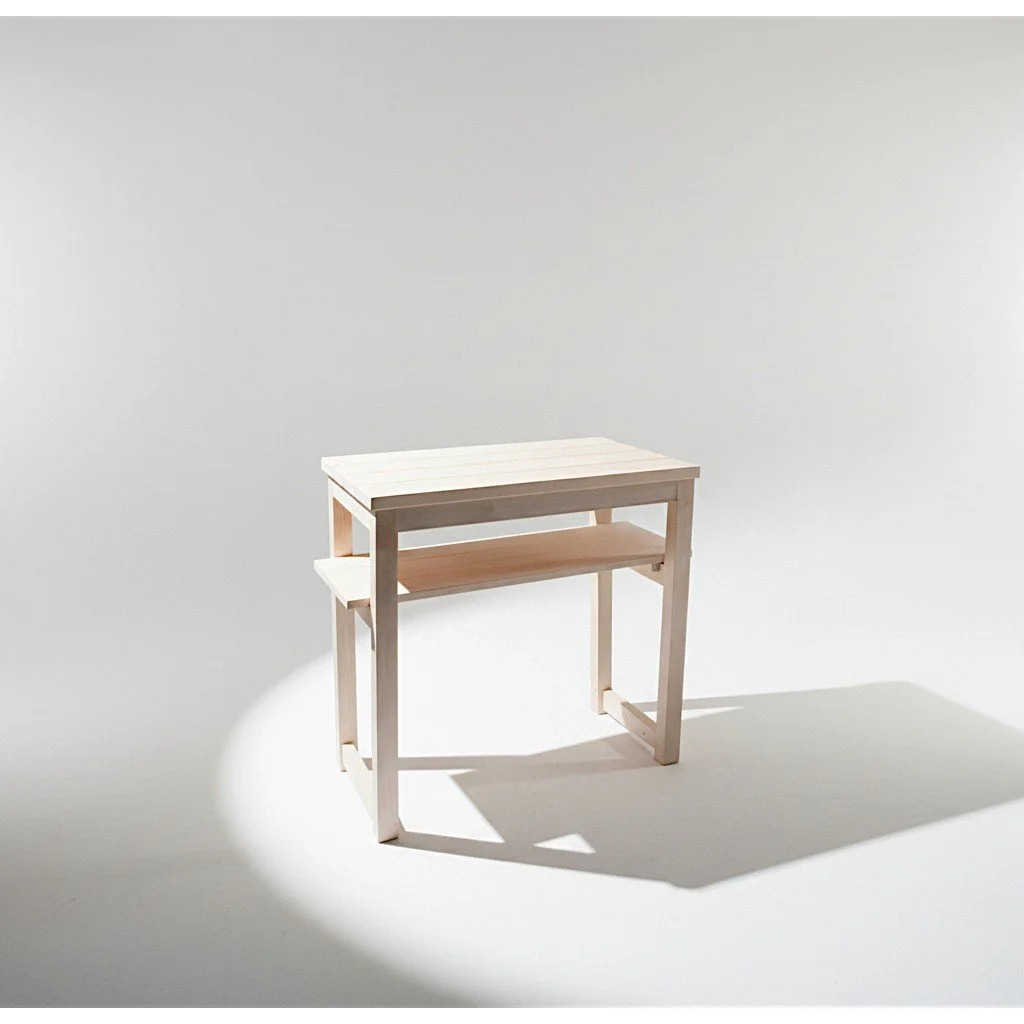
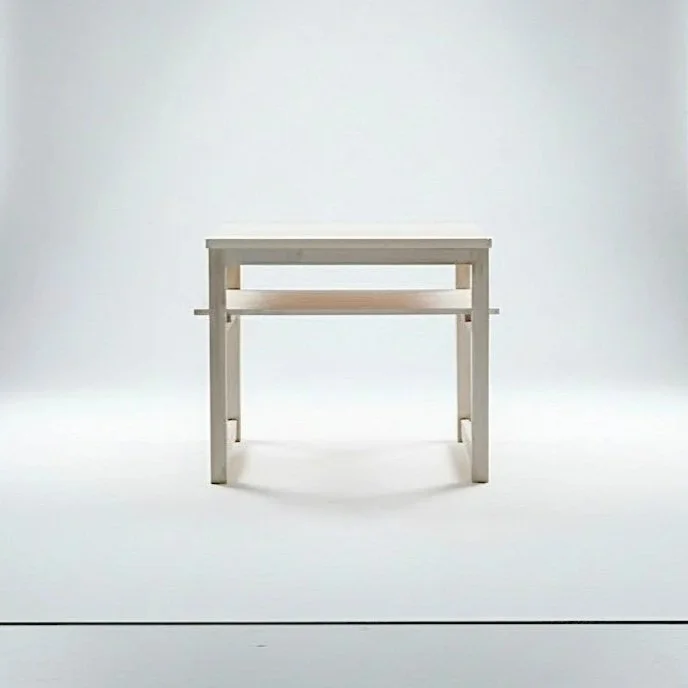
Final Render